WELCOME TO CALL US (+86) 18203311200 E-mail: admin@tehold-machine.com


Author: Site Editor Publish Time: 2026-03-19 Origin: Site
A commercial rice mill machine is the backbone of modern rice processing businesses, designed to handle large volumes with precision, efficiency, and consistent output quality. Unlike small or combined milling units, commercial systems are engineered for continuous operation, automation, and scalability—making them ideal for rice mills, grain processing plants, and export-oriented businesses.
If you are planning to upgrade or invest in a commercial rice mill machine, this guide will help you understand system configurations, performance factors, and how to select the right solution for your operation.
A commercial rice mill machine refers to a fully integrated rice processing system that converts raw paddy into finished white rice through multiple automated stages. These machines are built for:
High throughput processing
Consistent grain quality
Minimal broken rice ratio
Continuous industrial operation
Unlike basic machines, commercial units often include modular equipment that can be expanded based on production demand.
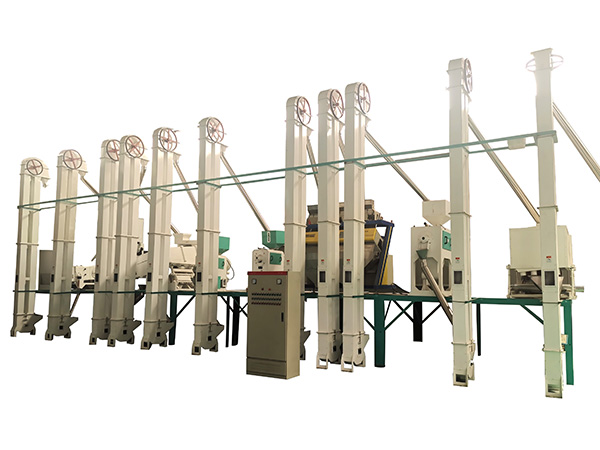
Commercial Rice Mill Machine
A modern commercial rice mill is not just one machine—it is a complete production line.
Removes dust, stones, and foreign materials before processing.
Separates the husk from paddy rice using rubber rollers.
Efficiently separates brown rice from unhulled grains.
Removes bran layers to produce white rice.
Enhances rice appearance and market value.
Classifies rice based on size and quality.
Automates final weighing and bagging.
Designed for large-scale production lines.
Features:
PLC control system
Minimal human intervention
High precision processing
Continuous operation
A cost-effective solution for medium enterprises.
Advantages:
Lower investment cost
Flexible operation
Easy maintenance
Expandable system that grows with your business.
Benefits:
Scalable production capacity
Custom configuration
Easy upgrades
| Industry Type | Recommended Solution | Output Capacity |
|---|---|---|
| Local Rice Mill | Semi-Automatic System | 1–2 tons/hour |
| Regional Supplier | Modular Rice Mill Plant | 2–5 tons/hour |
| Export Business | Fully Automatic Commercial Plant | 5–10 tons/hour |
Selecting the right system requires a strategic approach:
Evaluate daily processing volume and future expansion plans.
Higher automation reduces labor costs but increases initial investment.
Export-grade rice requires advanced polishing and grading systems.
Look for machines with optimized power consumption.
Reliable technical support is crucial for uninterrupted operation.
| Parameter | Typical Specification |
|---|---|
| Capacity | 1 – 10 tons/hour |
| Power Consumption | 20 kW – 150 kW |
| Automation | Semi / Fully Automatic |
| Rice Yield Rate | ≥ 68% |
| Broken Rice Percentage | ≤ 3–5% |
| Control System | PLC / Digital Panel |
| Installation Area | 50 – 300 m² |
| Feature | Commercial Rice Mill Machine | Standard Rice Mill |
|---|---|---|
| Capacity | High | Low–Medium |
| Automation | High | Low |
| Output Quality | Premium | Standard |
| Investment Cost | High | Low |
| Scalability | Excellent | Limited |
Designed for continuous operation with minimal downtime.
Advanced polishing ensures better appearance and market price.
Optimized systems minimize broken grains and material loss.
Digital systems ensure consistent results and easier management.
Higher initial investment but better profitability over time.
| Challenge | Cause | Solution |
|---|---|---|
| High energy costs | Inefficient equipment | Upgrade to energy-saving systems |
| Excess broken rice | Improper machine calibration | Fine-tune processing settings |
| Dust pollution | Poor ventilation | Install dust collection system |
| Maintenance downtime | Lack of servicing | Implement routine maintenance |
When choosing a manufacturer of commercial rice mill machines, consider:
Engineering expertise in large-scale systems
Custom plant design capability
Quality certifications
Installation and training services
Spare parts availability
A reliable manufacturer ensures smooth installation and long-term operational stability.
Perform daily inspections
Clean dust and residue regularly
Lubricate moving parts
Monitor electrical systems
Schedule periodic professional servicing
A fully automatic commercial rice mill plant with PLC control is the best option for high-capacity production.
Depending on capacity, it typically requires 50–300 square meters.
Most businesses achieve ROI within 1–3 years due to high processing efficiency and market demand.
Yes, modular systems allow customization based on production needs and budget.
No, modern machines feature user-friendly control systems and automation.
A commercial rice mill machine is a strategic investment for businesses aiming to scale production, improve rice quality, and increase profitability. With advanced automation, high capacity, and efficient processing, these systems are essential for modern rice milling operations.
By choosing the right configuration and a trusted manufacturer, you can build a high-performance rice processing plant that delivers consistent results and long-term value.


