WELCOME TO CALL US (+86) 18203311200 E-mail: admin@tehold-machine.com


Author: Site Editor Publish Time: 2026-11-20 Origin: Site
Most feed plant enquiries start with a machine list. That is the wrong starting point. As project engineers we begin with the flow: what arrives at the gate, what leaves it, and what happens in between. An animal feed plant equipment package only makes sense once that flow is drawn, because the grinder, mixer, pellet mill, cooler, and packer all have to agree on capacity.
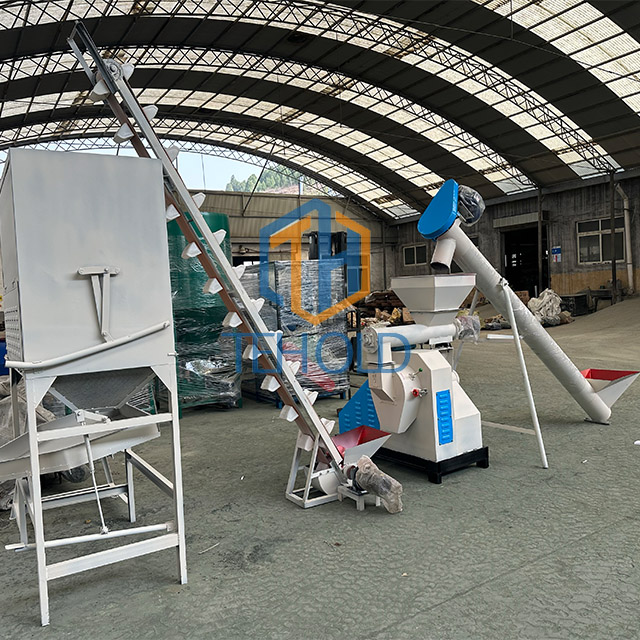
This guide walks the line in the order we lay it out on site, using our published 50T configuration: 117 kW of total power, a plant area of about 12 by 6 by 11 metres, a 0.3T boiler, and two feed ports. We explain why raw material enters by two routes, where pelleting and cooling fit, and how manual bagging closes the line.
Animal feed plant equipment is the set of machines that turns raw grain and powder into finished feed, as mash or pellets. A single grinder only reduces particle size. A plant receives, weighs, grinds where needed, mixes, conditions, pellets, cools, and packs. The value comes from the connections between stages, not from any one machine.
A complete line brings cleaning and weighing at the intake, grinding for whole grain, mixing, pelleting with its boiler, cooling, and packing. Our published range includes animal feed crushers, cutting machines, extruders, pellet machines, pelletizing production lines, and bagging machines, so the mix depends on the feed. The 50T design uses a splintered frame, compact design, and reasonable structure, and meets environmental protection requirements.
Raw materials are pre-weighed and introduced through two feed ports. The grain port feeds the mill by batch through a feeding sieve, so kernels are reduced under control rather than forced through continuously. Powder that needs no crushing is weighed separately and enters on its own route. The streams meet at the mixer. From there mash can be bagged, or sent to pelleting and cooling. Manual weighing and packing complete the process.
A plant is a production decision, not an order for iron. The configuration changes which feeds you can sell and how predictably you sell them.
We design around matched capacities. The published 50T figures separate the products: 3 to 5 tons per hour of mash and 2 to 3 tons per hour of pellets. Those are different rhythms, and the layout has to absorb the difference.
Grain and ready powder arrive by separate routes. Whole grain is weighed and fed by batch through a feeding sieve; powder needing no crushing is admitted directly. That matters when a formulation changes between batches. You know which ingredient went in, by which route and at what weight, instead of relying on an operator to remember.
The same plant finishes feed as powder or pellets. After mixing, mash goes to packing or on to pelleting and cooling. That gives a mill two products from one investment.
We publish the numbers buyers need early: about 117 kW total power, a plant area of roughly 12 by 6 by 11 metres, and a 0.3T boiler. We would rather give you a number we can hold in the technical schedule than a vague assurance that the plant is compact.
Specifications make a quotation comparable. Ask for each point in writing and leave anything unpublished open.
The published build uses national-standard raw materials and strong steel parts, with brand copper motors and famous-brand bearings. The 50T design has a splintered frame and compact structure. Surfaces contacting warm mash and pellets deserve attention, since dust and moisture accelerate wear. Ask which contact areas are specified by steel grade.
The feeding sieve and grinding screen set the particle size reaching the mixer. Exact apertures are not published; they are chosen for the feed you make and confirmed in the offer. We state proposed screens alongside the formulation so you can judge the trade-off.
For the 50T plant, connected power is about 117 kW and plant area about 12 by 6 by 11 metres, with a 0.3T boiler required. These are published figures. Our 50T animal feed machine page lists the configuration. Other published models include 6 to 10T and 15 to 20T plants, and the design is customizable. Treat capacity and layout as a matched pair.
Good painting work is part of the published build. Fine dust settles on frames and motors, so the coating affects cleaning time and corrosion. We confirm treatment in the technical schedule, not in adjectives.
Design is customizable for capacity, machine layout based on your godown size, and the finished products you want. Moving from mash-only to mash plus pellets alters routing, boiler duty, and packing. Bring your floor plan and target feeds to the first technical meeting. Custom work is quoted against a drawing, not a model name.
The configuration follows the feed and the ground it stands on.
These stop after mixing and go straight to weighing and packing. They suit a mill serving farmers who buy powder feed. The published mash capacity of 3 to 5 tons per hour belongs to the 50T design; smaller plants are quoted to your requirement.
Here mash moves to the pellet machine and cooler before packing. Published pellet capacity for the 50T plant is 2 to 3 tons per hour, and a 0.3T boiler is required. The extra stage adds height, heat, and cooling, so the building must allow for them.
Published models include 6 to 10T and 15 to 20T plants for smaller operations. Our overview of animal feed machine equipment sets out the range, and our note on selecting the right animal feed machine for production covers the early choice.
The same stages serve different rations. The formulation and the form of finished feed decide the layout.
Broiler and layer rations are a common reason buyers specify pelleting. A plant running both mash and pellets serves farms that prefer either.
Cattle and sheep rations often leave as mash or coarse pellets. Grinding handles whole grain from the grain port, while purchased powder enters by the second route.
Pig feed places a premium on consistency between batches. Weighing both raw material streams before they meet at the mixer makes that possible.
Smaller published models, from 6 to 10T and 15 to 20T, suit operations supplying a local area. These buyers value a compact layout and straightforward maintenance over automation.
A grinder reduces particle size; a plant produces a finished, weighed, packaged feed. The table shows what changes between them, so buyers stop comparing machines that do different jobs.
Feed plant vs standalone grinder | ||
Decision factor | Complete feed plant | Standalone grinder |
|---|---|---|
Scope | Weigh, grind, mix, pellet, cool, pack | Reduce particle size only |
Published capacity (50T) | 3-5 t/h mash; 2-3 t/h pellets | Not published as plant output |
Raw material intake | Two feed ports, batch weighing | Single feed point |
Boiler requirement | 0.3T boiler for the 50T plant | Not required for grinding |
Manual packing | Weighing and packing at the end | Separate bagging machine |
The grinder is still part of the plant; the question is whether you need the stages around it. If you sell finished feed to farmers, you do.
Work through these five points before you compare prices.
Confirm steel grade, motor type, and bearing specification. Published brands and national-standard materials are a starting point; the schedule should name what you are buying.
Size is the feed you must deliver, as mash and pellet tons per hour. Compare it against confirmed raw material supply and real demand, not a growth forecast you cannot support.
Ask for sieve and screen apertures with the target formulation. Opening decides particle size entering the mixer, which drives mixing behaviour and pellet quality.
Check paint and dust-sealing around the mill, mixer, and pelleting section.
Confirm who installs, who trains operators, and where spares are held. Our East Africa technicians and Nairobi warehouse exist for this.
A feed plant is built into a building and a utility plan. Three items decide whether commissioning goes smoothly.
The published footprint for the 50T plant is about 12 by 6 by 11 metres. Allow headroom for elevators and the pelleting route, and check the floor can carry loaded machines. Civil requirements belong in the layout drawing.
Machines are anchored and aligned so shafts, elevators, and conveyors run true. Ask who supplies anchor bolts, alignment tools, and the lifting plan.
Power, the 0.3T boiler, dust collection, and maintenance access must be planned together. Confirm voltage and phase before shipment.
A supplier is judged after the sale, not in the catalogue. Four questions separate a partner from a trading desk.
Will they give a signed schedule covering capacity, connected power, plant area, and boiler requirement, with mash and pellet figures stated separately?
Can they redraw the line for your godown and target feeds, including the choice between mash-only and a pelleting and cooling route?
Can they show mash and pellets from a comparable configuration, with screen apertures and formulation stated in writing?
Do they offer installation, operator training, and spares within reach of your site? We provide a minimum 12-month quality guarantee and hold backup spares in Kenya.
Tehold International supplies grain and feed processing machinery as turnkey packages, from design and fabrication to installation and after-sales service. Our technicians have over 30 years in the field, and we build with national-standard raw materials, brand copper motors, and famous-brand bearings. On a feed project we would rather confirm the power, footprint, and boiler duty in writing than let a sales drawing quietly become your civil specification.
The published design produces 3 to 5 tons per hour of powder or mash feed and 2 to 3 tons per hour of pellet feed. These are two output rates from the same plant, because pelleting and cooling add a stage.
Whole grain is fed by batch through a feeding sieve at the grain port, while powder that needs no crushing is weighed separately and enters its own route. This keeps both streams measurable before they meet at the mixer. It is a traceability and formulation control decision.
The published figures are about 117 kW of total power, a plant area of roughly 12 by 6 by 11 metres, and a 0.3T boiler. Confirm voltage, phase, and boiler fuel arrangement before shipment. These are planning numbers; the technical schedule fixes them for your configuration.
That is a common path. The line is arranged so mash goes to packing or continues to pelleting and cooling. Adding the pellet route brings the boiler, cooler, and extra height into the building plan, so it is easier to reserve space at the design stage than to retrofit a finished godown.
Capacity, connected power, plant area, boiler requirement, screen apertures, and layout drawing are confirmed in writing once your feeds and building are known. They are not fixed catalogue values. Send us your floor plan and target rations and we will return a comparable schedule.